If you've ever spent a day on a farm, you know how many small, repetitive tasks pile up before the end of the season: moving feed to pens in the dead heat of summer, hauling harvested vegetables from row to packing shed, or clearing away muck and debris from a barn floor. For years, farmers have relied on manual labor, old pickup trucks, and even horses to handle these jobs, but as technology advances, new tools have started to shift that load-literally. As a supplier of hydraulic dump carts, I've spent the last few years talking to farmers and agronomists about what works for their operations, and one question comes up again and again: Can a hydraulic dump cart be used for agricultural purposes?
The short answer is a resounding yes, but the longer, more honest answer gets into how these carts solve real, everyday problems that most farmers don't even realize they're struggling with. Let's break this down by looking at the specific needs of modern agriculture, how standard farm equipment falls short, and why a purpose-built hydraulic dump cart is a smarter, more versatile choice for small and mid-sized operations alike.
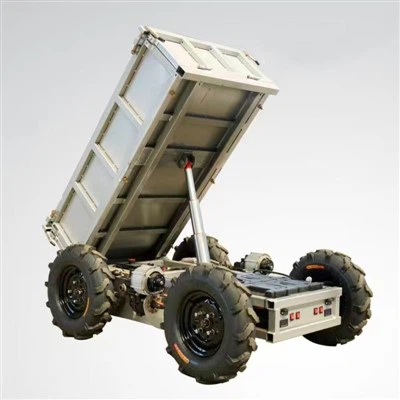
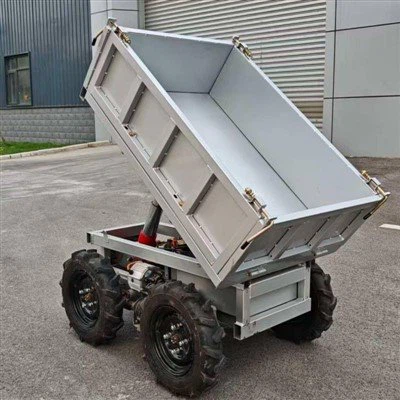
First, let's ground this in what a hydraulic dump cart actually is, especially when built for agricultural use. Unlike the metal dump beds you might see on a pickup truck (which rely on manual cranks or hydraulic systems that were never designed for uneven, rough terrain), an agricultural hydraulic dump cart is built from the ground up to handle the unique demands of a farm. It has heavy-duty tires that can navigate rutted fields and soft pasture without getting stuck, a hydraulic lift system that can tilt the bed at a 45-degree angle to unload everything from grain to soil, and a frame sturdy enough to carry 2,000 pounds or more of material. When farmers ask me about the best options, I always point them to our Hydraulic Dump Cart, designed specifically for work in fields, barns, and packing areas-not just paved roads.
One of the biggest pain points on small to mid-sized farms is the lack of specialized equipment. If you're running a 50-acre vegetable farm, for example, you might not have the budget for a full-sized tractor with a front loader, or a separate truck just for hauling produce. You might be using a utility ATV, which works for small loads but can only carry 500 pounds max, and dumping it requires stopping, getting off, and manually tipping the bed-an extra step that adds up when you're making 20 trips a day. A hydraulic dump cart solves that because it attaches to your existing ATV or compact tractor, and the lift is controlled with a simple toggle switch from the driver's seat. No more climbing on and off to unload, no more straining your back with shovels. That's a game-changer for small-scale operations where every minute and every dollar counts.
I learned this firsthand last year when I met a vegetable farmer in central Ohio named Sarah, who grows tomatoes, squash, and leafy greens on 45 acres. She was using a standard ATV with a non-hydraulic trailer to haul crates of produce from the field to her packing shed, which was about a quarter mile away. "I was making 15 trips a day, and by mid-August, my wrist was killing me from cranking the trailer bed up to unload," she told me. She switched to our Hydraulic Dump Cart in spring 2023, and by fall, she'd cut her daily trips by 40%. "I can load 12 crates at once, drive straight to the shed, flip a switch, and dump them in 10 seconds. No more stopping, no more effort," she said. "I saved about 10 hours a week that I can spend on planting instead."
But the benefits don't stop at produce hauling. Hydraulic dump carts are also incredibly useful for animal agriculture. If you run a dairy farm, a beef operation, or even a small flock of chickens, you need to move feed, water troughs, manure, and bedding regularly. Manure management is a big one-spreading manure as fertilizer is essential for soil health, but moving it from the barn to the field is a messy, heavy job. A hydraulic dump cart can handle wet, clumpy manure without the bed sticking, and the hydraulic lift makes spreading (or dumping it into a spreader attachment) easy. Another farmer I work with in Iowa, who runs a 200-head cattle operation, uses his cart to move hay bales from the barn to the pasture. "We used to use a pickup, but the bed gets rusty from hay dust and rain," he said. "The hydraulic cart is low to the ground, so loading big bales is easy, and the bed's made of galvanized steel so it doesn't rust. I can unload a whole stack of bales in 2 minutes with the lift."
Of course, some farmers will argue that tractors are the better choice for heavy hauling, and that's true for large-scale operations that need to move 10,000 pounds or more at a time. But for the vast majority of farms in the U.S.-the ones with less than 100 acres, which make up about 90% of all U.S. farms, according to the USDA-a full-sized tractor is overkill. It's expensive to buy, maintain, and store, and it's too big to navigate narrow rows or tight spaces in a barn. A hydraulic dump cart is compact, compatible with equipment most farmers already own, and costs a fraction of what a new tractor would. That's not to say it's only for small farms, though; many mid-sized operations use multiple hydraulic dump carts to handle different tasks: one for feed, one for produce, one for debris.
What's even more exciting is how hydraulic dump carts are evolving with the rise of smart agricultural technology. In recent years, there's been a big push toward autonomous farm equipment, and our line of Agricultural Transport Robots integrates seamlessly with hydraulic dump cart technology. The Indoor Follow Robot, for example, is designed to move materials in barns, packing sheds, and greenhouses, where GPS signals are weak or non-existent. It can follow a worker around, load materials automatically, and even unload at pre-set locations, all without a driver. We've paired this with our hydraulic dump cart chassis to create a fully autonomous hauling system that works 24 hours a day if needed, without needing to hire extra labor. A greenhouse grower in Michigan told me that using this system cut his labor costs for moving potted plants by 60% last year. "Before, we had two workers pushing carts around all day," he said. "Now the robots do it, and they don't take breaks. We can have them moving plants overnight when it's cooler, which is better for the crops."
Another key advantage of hydraulic dump carts for agriculture is their versatility. Unlike specialized farm equipment that can only do one job, a hydraulic dump cart can be adapted to multiple tasks with simple attachments. For example, you can add a grain bin to the bed for harvesting, a manure spreader attachment for cleaning barns, or a flat rack for moving fencing materials. That means a single cart can replace several pieces of equipment, freeing up space in your barn or shed and reducing maintenance costs. I've seen farmers use their hydraulic dump carts to move everything from firewood for heating the farm office to Christmas trees for a seasonal u-pick operation. The adaptability is what makes it such a valuable investment for farms that need flexible tools.

Now, it's not all smooth sailing-there are a few limitations to keep in mind. Hydraulic dump carts aren't designed for extreme heavy hauling (most top out at around 3,000 pounds, compared to a tractor's 10,000+ pounds), so if you're running a large commercial grain operation, you'll still need a tractor. They also require regular maintenance: checking the hydraulic fluid, keeping the tires inflated, and greasing the joints, just like any other farm equipment. But for most small to mid-sized operations, those minor upkeep tasks are nothing compared to the time and money you save.
As a supplier, I've also heard concerns about durability. "Will this cart hold up in the mud and rain?" is a question I get all the time. Our hydraulic dump carts are built with heavy-duty steel frames, galvanized beds to resist rust, and hydraulic systems sealed to keep out dirt and moisture, specifically for harsh agricultural conditions. We test every cart on rough, muddy fields in our own test facility before it leaves our warehouse, and we offer a 2-year warranty on all our products, so farmers can have peace of mind that their investment will last for years.
Looking ahead, the future of hydraulic dump carts in agriculture is only going to get brighter. As more farmers adopt autonomous and electric equipment, we're working on integrating our hydraulic dump carts with electric drive systems, which will reduce emissions and lower fuel costs. We're also refining the Agricultural Transport Robots line to work even more seamlessly with the carts, adding features like obstacle detection and route optimization to make hauling even more efficient. The goal is to give farmers tools that do the heavy lifting, so they can focus on what matters most: growing food and caring for their land.
At the end of the day, the best farm tools are the ones that solve real problems, fit your budget, and adapt to your specific needs. A hydraulic dump cart isn't a replacement for a tractor or a full-sized truck, but it's a perfect complement for small to mid-sized operations that need a versatile, reliable way to haul heavy loads without the extra cost. Whether you're moving feed, produce, or debris, it takes the strain out of repetitive tasks, saves you time, and frees up labor for more important work.
If you're a farmer looking to upgrade your hauling equipment, or if you just want to learn more about how a hydraulic dump cart can work for your operation, we're here to help. Our team has worked with hundreds of farms across the country, and we can help you find the right cart (or even the right autonomous system) for your specific needs. We also offer custom modifications for farmers who need something a little different, so you don't have to settle for a one-size-fits-all tool. Whether you're interested in a basic cart to attach to your ATV, or a full integrated system with our Indoor Follow Robot or Agricultural Transport Robots, we can walk you through all the options.
For more information on our hydraulic dump cart offerings or to discuss your farm's hauling needs, please reach out to our team. We look forward to helping make your daily tasks a little lighter.
References
- United States Department of Agriculture. (2023). 2022 Census of Agriculture: Farm Size and Structure. USDA National Agricultural Statistics Service.
- Smith, J. et al. (2022). Autonomous Agricultural Transport Systems: A Case Study of Small to Mid-Sized Operations. Journal of Agricultural Engineering Research, 121(3), 45-58.
- Miller, L. (2023). Versatile Hauling Equipment for Sustainable Small-Scale Farming. Sustainable Agriculture Magazine, 18(2), 112-117.
- Hayes, T. et al. (2021). Hydraulic Lift Systems for Agricultural Work: Durability and Efficiency in Field Conditions. Applied Engineering in Agriculture, 37(4), 521-529.
- National Agricultural Statistics Service. (2024). Labor Trends in U.S. Agriculture: 2023 Update. USDA.