



Transport Robot
Your Professional Transport Robot Supplier
SLoonlycon is a technology brand under Jiangsu Runtong Data Service Co., Ltd., a national high-tech enterprise founded in 2014 in Jiangsu, China. We specialize in intelligent mobility and autonomous system solutions, including unmanned transport vehicles, intelligent following vehicles, sightseeing vehicles, camping vehicles, luggage, and modular intelligent chassis. Our products are widely used in smart logistics, intelligent manufacturing, cultural tourism, and leisure applications, supporting reliable, cost-effective, and customizable intelligent operations.
Advanced Autonomous Technology
We focus on unmanned driving, intelligent following, obstacle avoidance, and remote control solutions for closed scenarios. Our systems are developed in-house and designed for stable, practical use in real industrial and commercial environments.
Strong Engineering Team
Around 60% of our staff are engineers in AI, automation, and mechanical design, with an average of 8 years of experience. This ensures reliable product design, system integration, and continuous technical improvement.
Reliable After-Sales Support
All vehicles and key components are covered by a 12-month warranty. We provide installation guidance, remote technical support, and original spare parts supply to ensure stable operation and long-term customer confidence.


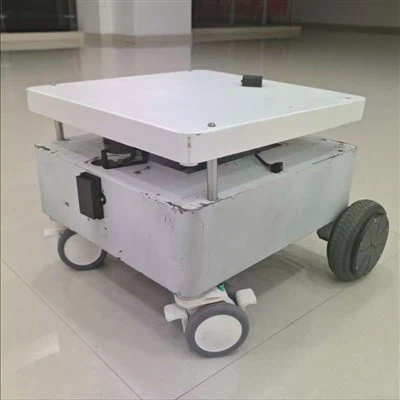
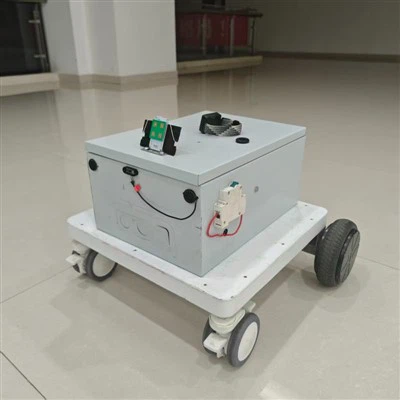

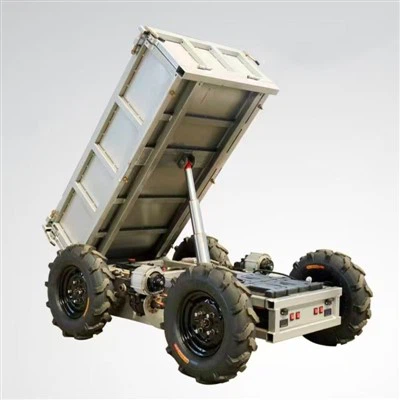
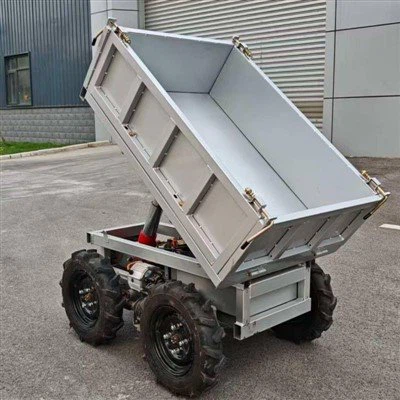
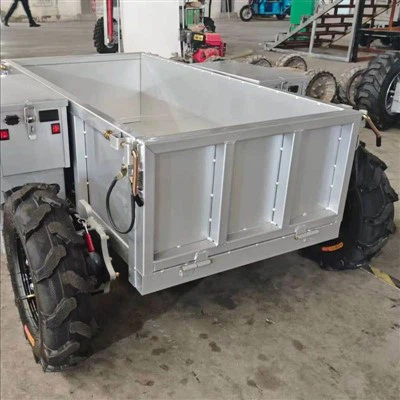
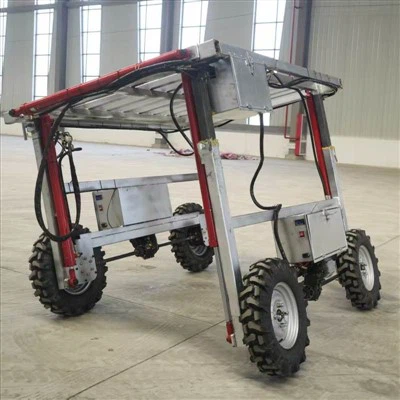
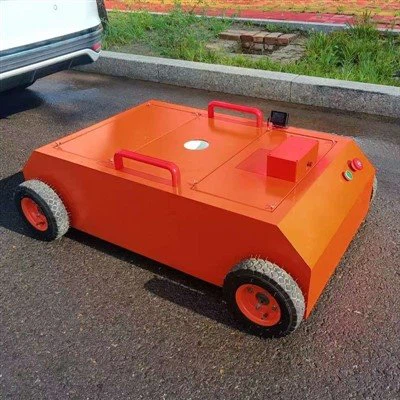

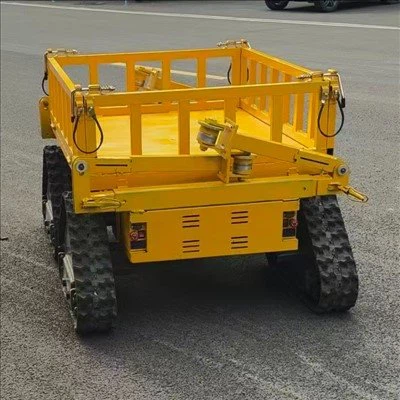
Parameter
|
Dimensions: |
L: 600mm W: 600mm H: 450mm |
|
Load Capacity: |
60kg |
|
Total Vehicle Weight: |
25kg |
|
Top Speed: |
15km/h |
|
Runtime: |
Depends on the battery and usage |
|
Battery Specification: |
Optional |
|
Intelligent Obstacle Avoidance: |
Radar obstacle avoidance or ultrasonic obstacle avoidance |
|
Tracking Distance: |
1.5m-10m |
|
Fuel: |
Electro |
Types of Transport Robot
The transport robot produced by our company mainly include the following types:
Follow Me Robots
Indoor follow robot,a compact and intelligent robotic platform designed to become your family's silent helping hand. Measuring just 40x40cm, this agile chassis is the core of a mobile assistant that effortlessly follows you around your home.
Rc Transport Robot
This wheel-based robotic transporter utilizes a unique hinge-point connection between its front and rear sections, enabling it to navigate through confined spaces that would challenge conventional rigid-frame vehicles.
Advantages of Transport Robot
One of the primary advantages of using transport robots is the significant boost in efficiency and productivity. Unlike traditional manual labor, transport robots are capable of working around the clock without the need for breaks or rest.
Another significant advantage of using transport robots is the potential for cost savings for businesses. While the initial investment in transport robots may be relatively high, the long-term savings can far outweigh the upfront costs.
Safety is a top priority in any workplace, and transport robots can help businesses improve safety standards and reduce the risk of accidents. By taking over tasks that may be hazardous for human workers, transport robots can minimize the potential for injuries and create a safer work environment.
Transport robots offer businesses a high level of flexibility and scalability, allowing them to adapt to changing demands and operational needs. Unlike traditional conveyor systems or manual transportation methods, transport robots can be easily reprogrammed and reconfigured to accommodate new workflows or processes.
In addition to improving operational efficiency and safety, transport robots can provide businesses with valuable data and analytics that can drive informed decision-making. By equipping transport robots with sensors and monitoring capabilities, businesses can gather real-time data on various aspects of their operations.
Applications of Transport Robot
Provisioning and picking (Pick)
In the picking area, transport robots perform tasks related to the targeted provision, collection or picking of materials. A distinction can be made between two basic principles: "man to goods" and "goods to man". In the "man to goods" approach, an employee follows the transport robot, which always stops where something is to be removed from shelves and picked.
Transport and relocation (Move)
The Move area covers the classic material flow between warehouse, production, dispatch and disposal. In these areas, transport robots often perform tasks that were previously carried out by forklift trucks or tugger trains. This concerns, for example, the feeding of finished parts, the transfer of empty containers or the return of packaging.
Assembly support and feeding (Assemble)
Transport robots can support assembly processes by providing components with pinpoint accuracy or transporting intermediate products to the next processing step. In contrast to the classic assembly line, they can move flexibly through the line and deviate from the standard course or skip delivery points as required.

Installation and Transportation Precautions for Transport Robots
● When transportation or installation of the robot (except robots which is allowed to handle one person, such as light-weight robot), be sure to work two or more people. Use crane or lift to avoid excessive manual handling.
● Wire must be fixed to the hoisting bolt (eye bolt). If other than the hoisting bolt is used, it may cause a serious damage.
● Do not stay under the robot during operation.
● When moving the robot, if you hold the robot over the jacket to lift up, the jacket may slip, causing the robot to drop. Be sure to take the robot jacket off before moving the robot to another location.

Load capacity: 50–1000 kg
Drive type: 2WD, 4WD, Differential drive
Navigation method: Line following, SLAM, GPS (closed area)
Control mode: Autonomous, Remote control, Follow-me
Battery type: Lithium-ion, LiFePO₄
Battery capacity: 20–100 Ah
Communication: WiFi, 4G, Bluetooth
Packaging and Shipping
|
Packaging |
Generally, we pack our goods in paper package and Iron pallet. We can pack the goods in your branded boxes after getting your authorization letters. |
|
Shipping |
Shipping by sea, by air, by express are acceptable. According to your requirements. |
Our Factory
Our Certificates
In 2017: Obtained the Value-Added Telecommunications Business Operation License (ICP) issued by the People's Republic of China.
In 2018: Secured the project of "Capacity Improvement for Key Scientific and Technological Service Institutions in the Industry-University-Research Collaborative Innovation Base of Jiangsu Remanufacturing and Intelligent Manufacturing Industry".
In 2020: Was recognized as a Key Platform of Suzhou Industrial Internet.
In 2021: Was awarded the title of Jiangsu Manufacturing Demonstration Platform;
In 2023: Obtained the CS Information System Construction and Service Capability Certificate and the Information Technology Service Standards (ITSS) Level 4 Compliance Certificate in the same year.
In 2024: Received the Suzhou Information Technology Innovation Product Certificate.


