How does the gearbox of an Orchard Transporter function?
As a reliable supplier of Orchard Transporters, I am frequently asked about the intricate workings of these machines, especially the gearbox. The gearbox is a pivotal component in an orchard transporter, determining its overall performance, efficiency, and adaptability to different orchard terrains. In this blog, I'll delve into the detailed functionality of the gearbox in an orchard transporter, explaining how it enables seamless operations in the unique environment of orchards.
The Basics of a Gearbox in an Orchard Transporter
A gearbox, often referred to as a transmission, is a mechanical device that modifies the speed, torque, and direction of power from the engine to the wheels of the orchard transporter. In an orchard setting, where the terrain can be uneven with slopes, soft soil, and narrow rows between trees, the gearbox plays a crucial role in ensuring that the transporter can carry heavy loads while maintaining proper traction and maneuverability.
The fundamental principle behind a gearbox is the use of gears - toothed wheels that mesh together. When the engine generates power, it rotates the input shaft of the gearbox. This rotation is then transferred to the output shaft through different gear combinations, allowing the transporter to move at different speeds and develop different levels of torque.
Types of Gearboxes Used in Orchard Transporters
There are several types of gearboxes commonly employed in orchard transporters, each with its own unique characteristics and advantages.
Manual Gearbox
The manual gearbox is one of the simplest and most widely used types. It gives the operator full control over the gear selection. By using a gear lever, the operator can shift between different gears based on the load, terrain, and desired speed. Manual gearboxes are known for their durability and relatively low cost. They are also easy to maintain, which is an important consideration for orchard operations where downtime can be costly. However, they require more skill and physical effort from the operator, especially when operating on hilly terrain or when frequently starting and stopping.
Automatic Gearbox
On the other hand, automatic gearboxes offer a more convenient and user - friendly option. These gearboxes use a complex system of sensors, hydraulic pumps, and planetary gears to automatically select the appropriate gear based on the vehicle's speed, engine load, and other factors. This allows the operator to focus more on steering and navigating the orchard, rather than constantly shifting gears. Automatic gearboxes provide smooth and seamless gear changes, which can improve the overall comfort of the operator and reduce wear and tear on the vehicle. However, they are generally more expensive to purchase and repair compared to manual gearboxes.
Continuously Variable Transmission (CVT)
Some orchard transporters are equipped with a Continuously Variable Transmission (CVT). Unlike traditional gearboxes with a fixed number of gears, a CVT can provide an infinite number of gear ratios. It uses a system of belts and pulleys to vary the effective diameter of the input and output shafts, allowing for smooth and efficient power transfer. CVTs are known for their excellent fuel efficiency, as they can keep the engine running at its optimal speed most of the time. They also provide a very smooth and comfortable driving experience, making them ideal for long - hours of operation in the orchard. However, CVTs may not be as robust as manual or automatic gearboxes in heavy - duty applications and can be more expensive to repair.
The Function of the Gearbox in Different Orchard Operations
The gearbox in an orchard transporter is designed to meet the specific requirements of various orchard operations.
Loading and Unloading
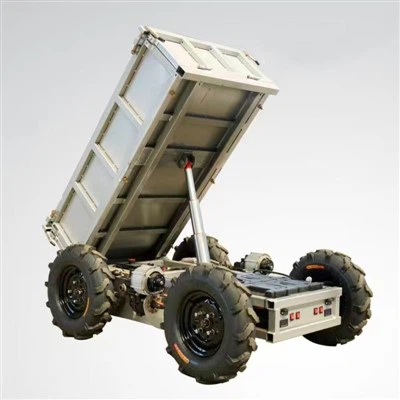
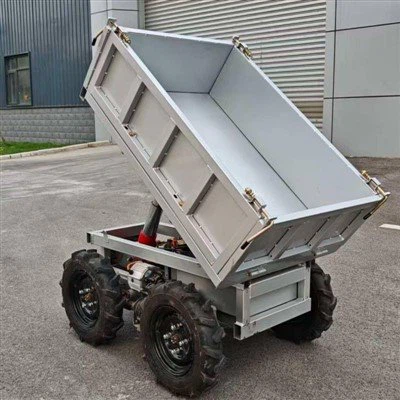
When loading the transporter with heavy fruits, equipment, or other materials, a low - gear ratio is often required. A low - gear ratio provides high torque, which allows the transporter to start moving from a standstill with a heavy load without stalling. For example, when using a Hydraulic Dump Cart to transport harvested fruits, the gearbox needs to be shifted to a low gear to handle the weight during the initial movement.
Navigating Different Terrains
Orchards can have a variety of terrains, including flat ground, slopes, and rough soil. On flat ground, a higher - gear ratio can be selected to achieve faster speeds and improve efficiency. When moving uphill, a lower - gear ratio is used to increase torque and overcome the gravitational force. The operator needs to adjust the gear according to the terrain to ensure smooth and safe operation. In addition, the gearbox also helps the transporter to maintain traction on soft or slippery soil by providing the appropriate amount of power to the wheels.
Maneuvering in Narrow Rows
Another important aspect of orchard operations is maneuverability. The gearbox allows the operator to make precise speed adjustments when moving through narrow rows between trees. A lower speed and finer control can be achieved by selecting the appropriate gear, reducing the risk of damaging the trees or the transporter itself.
Maintenance and Troubleshooting of the Gearbox
Proper maintenance of the gearbox is essential to ensure its long - term performance and reliability. Regularly checking the gearbox oil level and quality is crucial, as the oil lubricates the gears and reduces friction and wear. The oil should be changed at the recommended intervals to prevent contamination and ensure optimal lubrication.
Inspecting the gearbox for any signs of damage, such as leaks, unusual noises, or vibrations, is also important. If any issues are detected, they should be addressed promptly to prevent further damage. In some cases, minor repairs or adjustments may be sufficient, while in more severe cases, the gearbox may need to be replaced.

In case of a malfunction, it is important to follow the manufacturer's troubleshooting guide. This may involve checking the electrical connections, sensors, or hydraulic systems, depending on the type of gearbox.
Conclusion
In conclusion, the gearbox is a critical component of an orchard transporter, enabling it to perform various tasks efficiently and effectively in the unique orchard environment. Whether it is a manual, automatic, or CVT gearbox, each has its own advantages and is designed to meet the specific needs of orchard operations. As a supplier of orchard transporters, we understand the importance of a well - functioning gearbox and are committed to providing high - quality products and reliable after - sales service.
If you are in the market for an orchard transporter or need more information about our products, please feel free to contact us for a detailed discussion. We are eager to assist you in finding the most suitable solution for your orchard transportation needs.
References
- Automotive Transmission Handbook, Edited by Friedrich - Karl Benninghoff, Springer - Verlag Berlin Heidelberg 2012.
- Principles of Vehicle Dynamics, by Thomas D. Gillespie, Society of Automotive Engineers, Inc., 1992.