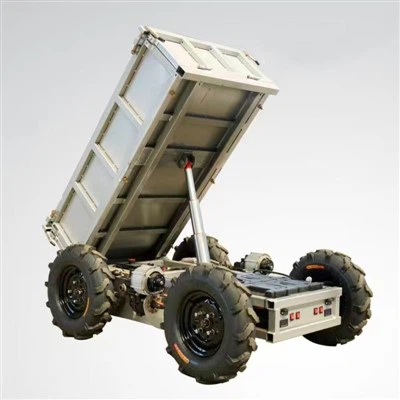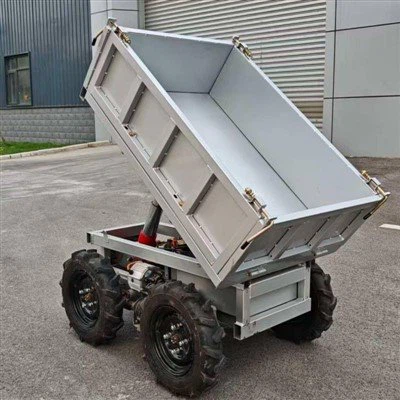
As a seasoned supplier of Orchard Transporters, I've seen firsthand the crucial role hydraulic systems play in these machines. In this blog, I'm going to delve into how the hydraulic system of an Orchard Transporter operates, providing insights into its components, working principles, and benefits.
Components of the Hydraulic System
The hydraulic system of an Orchard Transporter consists of several key components, each with its own specific function.
Hydraulic Pump
At the heart of the system is the hydraulic pump. This device is responsible for converting mechanical power into hydraulic energy. In an Orchard Transporter, the pump is typically driven by the engine. As the engine runs, it turns the pump, which then draws in hydraulic fluid from the reservoir. The pump increases the pressure of the fluid and sends it through the system. There are different types of pumps used, including gear pumps, vane pumps, and piston pumps. Gear pumps are commonly used in Orchard Transporters due to their simplicity, reliability, and cost - effectiveness. They work by meshing gears that trap and move the hydraulic fluid from the inlet to the outlet.
Reservoir
The reservoir serves as a storage tank for the hydraulic fluid. It also helps in dissipating heat generated during the operation of the system. The fluid in the reservoir is cooled by the surrounding air, and it also allows any air bubbles in the fluid to rise to the surface and escape. A proper - sized reservoir is essential to ensure that the system has an adequate supply of fluid and to maintain the fluid's temperature within an acceptable range.
Valves
Valves are used to control the flow, pressure, and direction of the hydraulic fluid. There are several types of valves in the hydraulic system of an Orchard Transporter. Pressure relief valves are crucial for safety. They limit the maximum pressure in the system, preventing damage to the components. Directional control valves determine the path of the fluid, allowing the operator to control functions such as lifting, lowering, and moving the load. Flow control valves regulate the speed of the hydraulic actuators, ensuring smooth and controlled operation.
Hydraulic Cylinders and Motors
Hydraulic cylinders are used to convert the hydraulic energy into linear motion. In an Orchard Transporter, they are often used for functions like lifting the load bed or adjusting the height of the transporter. When pressurized fluid enters one end of the cylinder, it pushes the piston, which then moves the connected part. Hydraulic motors, on the other hand, convert hydraulic energy into rotational motion. They are used to drive the wheels or other rotating components of the transporter, providing the necessary power for movement.
Working Principles of the Hydraulic System
The operation of the hydraulic system in an Orchard Transporter can be understood through the following steps:
Fluid Intake
The process starts with the hydraulic pump drawing hydraulic fluid from the reservoir. The fluid is clean and free of contaminants, as it passes through a filter before entering the pump. This ensures the longevity of the pump and other components in the system.
Pressure Generation
Once the fluid is in the pump, the pump increases its pressure. The high - pressure fluid is then forced out of the pump and into the system. The pressure generated by the pump depends on the design and capacity of the pump, as well as the requirements of the system.
Fluid Distribution
The high - pressure fluid is then directed to the various valves. The directional control valves determine which hydraulic cylinders or motors the fluid will flow to. For example, if the operator wants to lift the load bed of the Orchard Transporter, the directional control valve will direct the fluid to the corresponding hydraulic cylinder.


Actuation
When the pressurized fluid reaches a hydraulic cylinder or motor, it causes the component to operate. In the case of a hydraulic cylinder, the piston moves, and in the case of a hydraulic motor, the shaft rotates. This movement is then transferred to the relevant parts of the Orchard Transporter, such as lifting a heavy load of fruits or moving the vehicle.
Fluid Return
After the fluid has done its work in the cylinder or motor, it returns to the reservoir. On its way back, it may pass through another filter to remove any debris that may have been picked up during the operation. This cycle repeats continuously as long as the system is in use.
Benefits of Hydraulic Systems in Orchard Transporters
High Power Density
Hydraulic systems can provide a large amount of power in a relatively small package. This is beneficial for Orchard Transporters, as they need to be compact and maneuverable in the orchard environment while still being able to handle heavy loads. A hydraulic cylinder can generate a significant amount of force due to the high - pressure fluid, allowing the transporter to lift and move large quantities of fruits or equipment.
Precise Control
The use of valves in the hydraulic system allows for precise control of the movement. The operator can easily adjust the speed, direction, and force of the hydraulic actuators. This is important when handling delicate fruits or when performing tasks that require accuracy, such as placing a load in a specific location.
Smooth Operation
Hydraulic systems provide smooth and continuous motion. Unlike some mechanical systems that may have jerky movements, the hydraulic actuators move smoothly, reducing the risk of damage to the load. This smooth operation also contributes to the overall comfort of the operator, especially during long - term use.
Our Offerings and Further Considerations
As a reliable Orchard Transporter supplier, we offer a range of models with advanced hydraulic systems. Our products are designed to meet the diverse needs of orchard farmers. For those looking for more flexibility, we have the Adjustable Transporter in Width and Height, which can be customized to fit different orchard layouts and load requirements.
We also provide Agricultural Transport Robots that are not only suitable for outdoor orchard use but also have applications in other agricultural settings. And for indoor operations, our Indoor Follow Robot offers intelligent and efficient transporting solutions.
If you're interested in enhancing your orchard operations with our high - quality Orchard Transporters, we encourage you to contact us for a detailed discussion. Whether you have questions about the hydraulic system, want to know more about our product features, or are ready to place an order, our team of experts is here to assist you.
References
- Fluid Power Handbook. American Society of Mechanical Engineers.
- Fundamentals of Hydraulic and Pneumatic Systems. Pearson Education.