Hey everyone! Let's cut to the chase-if you're here asking, "Are follow me robots equipped with cameras?", you're probably someone who's seen these nifty bots zipping around warehouses, farms, or even busy office spaces and wondered how they "see" where they're going. As a follow me robots supplier, I get this question all the time, and honestly? The short answer is yes-but it's way more than just slapping a camera on a wheeled cart and calling it a day.
First off, let's make sure we're on the same page: follow me robots (also called autonomous mobile robots, or AMRs for short) aren't your basic, pre-programmed warehouse bots that just follow a fixed path. They're designed to move with you, adjust to your pace, and avoid obstacles in real time. And cameras are a huge part of that, but they work with other tech to make it all happen. Let's break this down because there's a lot that goes into their "sight."
When a follow me robot leaves our facility, every single one is built with at least one-often several-cameras, but not just the tiny webcams you use for Zoom calls. These are specialized sensors, usually 2D or 3D vision cameras, that capture what's around the bot. But here's the kicker: cameras alone can't do the job. They pair with things like LiDAR (light detection and ranging) sensors, which shoot out laser pulses to map distances, and sometimes ultrasonic sensors for close-range stuff. Why mix them? LiDAR is great for long-range, high-precision mapping, but it's not great at picking up small, low-contrast obstacles-like a loose sock on a warehouse floor or a tiny tool left out. That's where cameras step in, using computer vision to spot those things and tell the bot to slow down or swerve.
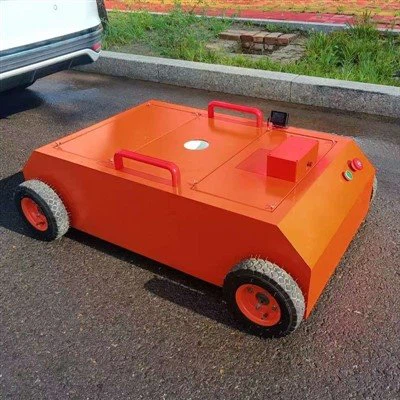
Take our adjustable transport cart, for example. It's one of our most popular bots for small to mid-sized warehouses, and it's packed with a front-facing 3D camera that works with a top-mounted LiDAR. The camera can read barcodes on pallets, recognize when a human operator is holding a product (that's how the bot follows you-more on that in a sec), and even detect if a worker is stepping into its path from a blind spot. The adjustable width and height mean it can fit through narrow aisles (perfect for retail backrooms) and carry different loads, but the cameras are what make it not crash into a stack of boxes while doing it.
Speaking of following you-how do these bots track a human without a leash? Most follow me robots use a combination of camera-based tracking and sometimes RFID tags, but the cameras are key here. The bot's camera is set up to recognize things like a worker's uniform color, a specific badge, or even their movement pattern. But we've refined that over the years: our Follow The Transport Robot line uses a stereo camera setup, which gives depth perception so the bot can tell the difference between a human and a moving shelf, for example. That's a big deal-imagine a warehouse where you're moving pallets and boxes; you don't want the bot confusing a 500lb shelf for the person it's supposed to follow.
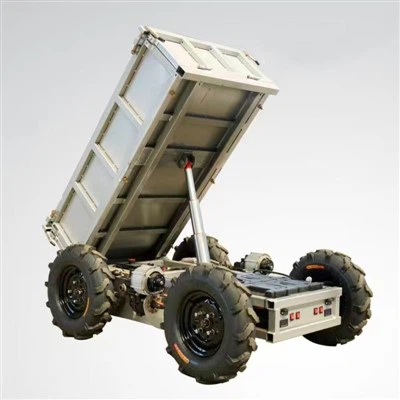
Now, let's talk about different use cases because cameras work a little differently depending on where the robot is. For our Agricultural Transport Robots, cameras are built to handle outdoor conditions-dust, rain, bright sunlight, even low light at dawn or dusk when farmers are working long hours. These bots, like the Orchard Transporter, have weather-sealed cameras that can spot tree trunks, crop rows, and even workers picking fruit, so they don't crash into branches or get stuck in mud. They also use computer vision to identify ripe produce (that's a whole other feature, but it ties back to cameras) which is why farmers love 'em-they can follow the worker through the orchard and carry all the picked fruit without needing a manual guide.

Wait, but what about older follow me robots that don't have cameras? Yeah, those are out there-usually the ones that use just magnetic tape on the floor or pre-set LiDAR maps. But those are limited: if you move a pallet or rearrange a warehouse, the tape has to be re-laid, and the LiDAR-only bots might miss small obstacles. The robots we build? Every one has cameras because we want them to be flexible. The last thing a farmer or warehouse manager needs is a bot that can only work in one fixed space. Our Drive-by-Wire Chassis, which is the base for most of our follow me robots, is designed to sync with camera and LiDAR data seamlessly, so you can move the bot to a new area and it adapts in minutes, not hours.
I get it-some people worry about cameras on these bots, like privacy in office spaces or farms, but we've thought about that too. Our cameras only activate when the bot is following a human or mapping a new area; they don't stream video back to any central server unless you explicitly set that up, and all data is anonymized for safety. It's not like a Ring doorbell that's recording every corner of your building. These cameras are just tools for the robot to "see" its environment, not spy on anyone.
Let me share a quick example from a customer we work with: a small family farm in Ohio that uses our Orchard Transporters. Before they had the bots, their workers were walking miles a day carrying heavy crates of apples, which led to back injuries. Now, the workers grab a crate, the bot follows them through the orchard, and the cameras keep the bot from bumping into trees or other workers. They told us it's cut their physical strain by 70%, and the cameras meant they didn't have to re-program the bots every time they planted new rows of apple trees. That's the kind of real win we love.
Another point: if a camera on one of our bots ever goes down (though we test them thoroughly before shipping), the robot has built-in safety features to stop moving until it's fixed. We don't want a bot zipping around blind because one sensor failed. The cameras are part of a redundant system, so even if the LiDAR has a blip, the camera can pick up an obstacle and trigger a stop. That's why we stand behind our products-we know the tech works, and cameras are non-negotiable for that reliability.
So to circle back to the original question: yes, every follow me robot we sell is equipped with cameras, and that's why they're more useful than the old, rigid robots of the past. They're not just moving carts-they're collaborative tools that work with humans, and cameras are the bridge between the bot's digital map and the real world it's operating in. Whether you're in a warehouse, a farm, a retail space, or a busy office, these cameras make the robot flexible, safe, and easy to use without a ton of setup.
If you're thinking about adding follow me robots to your operation-whether it's for moving pallets, crop harvests, or office supplies-don't hesitate to reach out for a chat. We can walk you through which model fits your needs, show you how the cameras and other sensors work together, and even set up a demo so you can see 'em in action. We've helped tons of small and mid-sized businesses make their workflows smoother, and we're excited to help you too.
References
- International Organization for Standardization (ISO) 13482:2014 - Robots and robotic devices - Safety requirements for personal care robots
- Field Robotics (2022) - "Vision-Based Navigation for Agricultural Autonomous Mobile Robots"
- Warehouse Robotics Institute (2023) - "AMR Sensor Integration: Balancing Cameras and LiDAR for Industrial Use Cases"
- Journal of Field Robotics (2021) - "Weather-Resistant Cameras for Outdoor Autonomous Systems"
- Drive-by-Wire Technology Journal (2020) - "Chassis Integration for Collaborative Mobile Robots"