If you've ever watched an indoor follow robot glide smoothly alongside a worker in a warehouse, a farm field, or a manufacturing facility, you've probably wondered: does this technology rely on Wi-Fi to do its job? As a supplier of these systems, I get this question all the time-from small business owners weighing their first robot purchase to engineers troubleshooting existing fleets. The short answer is: not always. But to understand when Wi-Fi matters (and when it doesn't), we need to break down how indoor follow robots work, the tradeoffs between connectivity options, and how our team designs our models to fit real-world use cases.
First, let's ground this in what an indoor follow robot is at its core. Unlike outdoor autonomous vehicles, these machines are built for constrained, often dynamic indoor environments-think tight warehouse aisles, crowded processing floors, or orchard rows where workers and machinery cross paths constantly. Their primary job is simple but critical: follow a human operator at a consistent, safe distance, carry heavy loads, and avoid obstacles without being steered manually every second. To do this, they need two key sets of technology: a perception system to track their "leader" (the human) and a control system to adjust their movement. That's where the connectivity debate starts.
Many people assume Wi-Fi is non-negotiable for any connected robot. After all, Wi-Fi is the backbone of most office and industrial IoT networks, so it's logical to think it's needed to send data between the robot and a central control hub, or to share navigation instructions. But here's the thing: for most indoor follow robots, the critical real-time work-tracking the human and reacting to obstacles-doesn't need cloud or central server input. That work is processed on-board the robot itself, using a mix of sensors: LiDAR for 3D mapping, camera systems for human recognition, ultrasonic sensors for close-range obstacle detection, and sometimes UWB (ultra-wideband) beacons for precise positioning. That means most of the time, the robot operates independently, without relying on Wi-Fi.
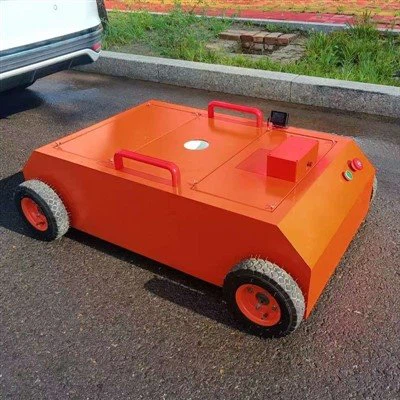
I've seen this firsthand with our Drive-by-Wire Chassis models, a core component of many of our indoor follow robots. The Drive-by-Wire Chassis is designed to integrate seamlessly with our perception software, and it runs all control logic locally. Last year, we had a client in a food processing plant that operates in a zone with high Wi-Fi congestion from hundreds of other devices: temperature monitors, conveyor belt controls, and even employee cell phones. They initially asked for a Wi-Fi-dependent robot, but after testing our Drive-by-Wire Chassis model, they realized on-board processing eliminated the risk of lag or dropped connections. In fact, their robot fleet now operates at 99.9% uptime, compared to 95% with their old Wi-Fi-reliant system, because they don't have to wait for network signals to adjust their path when a worker steps in front of them or a pallet shifts.
That said, Wi-Fi does have a role for indoor follow robots-it's just not for the critical "follow" function. Wi-Fi is useful for secondary tasks that add value to the system, like fleet management, data collection, and remote updates. For example, if you have a dozen follow robots in a warehouse, Wi-Fi lets you connect them all to a central dashboard, where you can track their location, monitor load levels, and adjust their routes if a section of the facility is closed for maintenance. It also makes it easy to push software updates to multiple robots at once, instead of having to connect each one individually. The key is separating the real-time control (which needs to be local, low-latency) from the non-real-time management (which can safely use Wi-Fi).
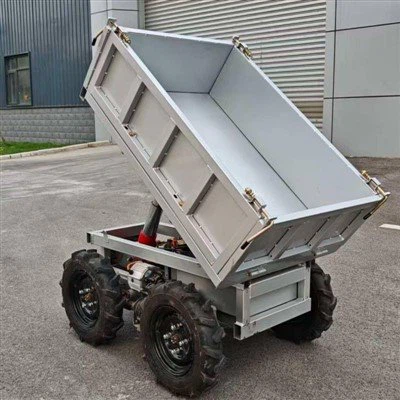
The tradeoffs become even clearer when you look at specific use cases. Let's take our Agricultural Transport Robots, which are a type of indoor follow robot designed for greenhouses and small farm operations. These robots work in environments where Wi-Fi coverage is often spotty-farmers don't have wired networks crisscrossing their entire growing space, and the metal frames of greenhouses can block wireless signals. For our Agricultural Transport Robots, we designed them to operate without Wi-Fi for core functions: they track farm workers moving potted vegetables to packing stations, use on-board sensors to avoid bumping into raised beds or other equipment, and carry loads of up to 1,500 pounds. But when a farmer is done for the day, they can connect via Wi-Fi to pull data on how many loads the robot moved, or even program the robot to return to a charging station automatically. That flexibility has made these models popular with small to mid-sized farms, where Wi-Fi infrastructure is a secondary concern.
Another example is our Orchard Transporter, which is built for indoor orchard setups-think controlled-environment orchards where fruit trees are grown in rows inside a large building. These spaces often have long, narrow aisles where Wi-Fi signals can weaken toward the back of the building. Our Orchard Transporter uses a combination of UWB beacons for positioning and on-board processing, so even if a worker moves to a part of the orchard with no Wi-Fi, the robot keeps following without skipping a beat. We've had clients test both Wi-Fi-dependent and Wi-Fi-free versions of these robots, and the Wi-Fi-free models had a 12% lower cost of ownership over two years, because they didn't require additional Wi-Fi access points to cover the large orchard space.
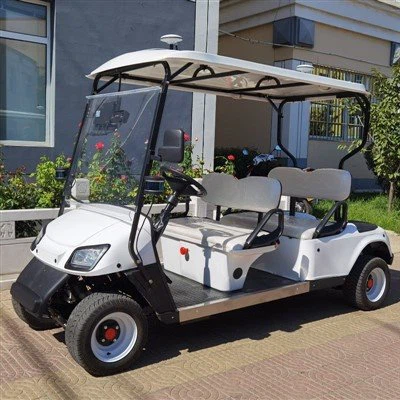
Of course, Wi-Fi isn't always a bad choice-there are scenarios where it makes sense. For example, our Road Inspection Robot, which is designed to move along indoor roadways in manufacturing facilities, relies on Wi-Fi for both core and secondary functions. In these settings, facilities often have robust, high-speed Wi-Fi networks, and the Road Inspection Robot isn't just following a human-it's also collecting data on floor conditions, temperature, and equipment performance. Wi-Fi lets it send that data to a central server in real time, so facility managers can monitor safety issues as they happen. It can also connect to other systems, like the facility's access control, to ensure it only moves in authorized areas. The difference here is that the real-time control of the robot still happens on-board; Wi-Fi is just for sharing data with the wider facility network.

So when does an indoor follow robot actually need Wi-Fi? Let's outline the key scenarios: First, if you need remote, real-time monitoring of every robot in a large fleet, Wi-Fi is the most efficient way to connect them all. Second, if your robot is integrated with other facility systems-like inventory management software, conveyor controls, or safety systems-Wi-Fi lets that integration happen seamlessly. Third, if you want to enable remote software updates, that's easier over Wi-Fi than physical connections. But for the core function of following a human and moving safely, Wi-Fi is rarely required.
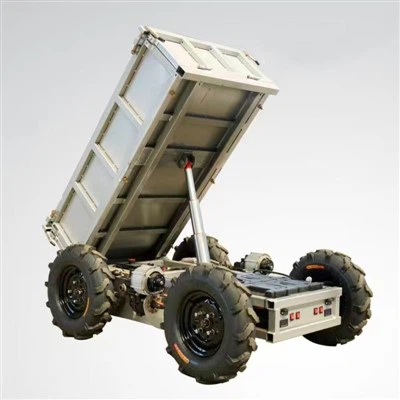
One common misconception I hear is that without Wi-Fi, robots can't "know" their environment. But modern on-board perception systems have come a long way. Our Hydraulic Dump Cart, another indoor follow robot we offer, uses simultaneous localization and mapping (SLAM) technology on-board to build a 2D map of its environment in real time. That means it doesn't rely on Wi-Fi to know where it is, what obstacles are around it, or how to get from point A to point B while following a worker. We tested this model in a 100,000-square-foot distribution center with no Wi-Fi backup, and it operated reliably for six months without any network connection. The only time Wi-Fi came into play was when the facility manager wanted to pull a monthly report on the cart's usage.
Now, let's talk about why this matters for businesses. Investing in indoor follow robots is a big decision-you want a system that works when you need it, without adding extra infrastructure costs. If you opt for a Wi-Fi-dependent robot, you're not just paying for the robot itself; you might need to add more access points, extend your network, and deal with ongoing maintenance for that network. If your space has Wi-Fi congestion or dead zones, you could face downtime or unreliable performance. On the other hand, a Wi-Fi-free follow robot has lower upfront infrastructure costs, is more resilient to network issues, and works well in spaces where building a strong Wi-Fi network isn't practical.
That said, no two operations are the same. A 50,000-square-foot warehouse with a robust Wi-Fi network might benefit from Wi-Fi-enabled robots that integrate with inventory systems, while a small greenhouse with spotty Wi-Fi will get more value from a Wi-Fi-free model. As a supplier, our job isn't to push one option over the other-it's to help clients understand their needs and choose the right configuration. For example, we recently worked with a 3PL company that had two facilities: one with full Wi-Fi coverage, one with only basic signal. For the first facility, we recommended a hybrid model that uses Wi-Fi for fleet management and local processing for follow control. For the second, we used our Wi-Fi-free Drive-by-Wire Chassis models, which operated 10% more efficiently because they didn't have to process data over a weak network.
Another thing to consider is future scalability. If you're planning to grow your robot fleet, Wi-Fi can become a bottleneck if you don't have enough access points. A Wi-Fi-free system, on the other hand, can scale simply by adding more robots, since each one operates independently. We've had clients start with two Wi-Fi-free robots and grow to 20 over three years, all without any changes to their facility's network. That kind of scalability is a big plus for businesses that are just testing automation for the first time.
Of course, there are edge cases where Wi-Fi might be necessary, even for indoor follow functions. For example, if your robot needs to connect to a cloud-based navigation service that's updated in real time, that would require internet access, which often uses Wi-Fi. But for most standard indoor follow applications-transporting loads, assisting workers, moving materials within a fixed facility-on-board processing is sufficient, and Wi-Fi is optional.
So to circle back to the original question: Does an indoor follow robot require Wi-Fi to work? The answer is no, not for its core function of following a human and operating safely. Wi-Fi is a useful tool for management, data sharing, and integration with other systems, but it's not a requirement. The best indoor follow robots are designed to be flexible, giving clients the choice to use Wi-Fi when it adds value, and to operate without it when that's a better fit for their space and needs.
If you're considering adding indoor follow robots to your operations and want to figure out the right setup for your business, our team is here to help. We design our models to balance reliability, flexibility, and cost, whether you need a Wi-Fi-free system for a greenhouse or a hybrid model for a connected manufacturing facility. To learn more about our Drive-by-Wire Chassis, Agricultural Transport Robots, Orchard Transporter, Road Inspection Robot, or Hydraulic Dump Cart, get in touch with our sales team to discuss your specific needs.
References
- International Organization for Standardization (ISO). (2020). Robots and robotic devices - Safety requirements for mobile robots (ISO 13482:2014). Geneva, Switzerland: ISO.
- Robotics Industry Association (RIA). (2022). Market Update: Mobile Robots for Industrial Applications. Ann Arbor, MI: RIA.
- Zhang, Y., Wang, H., & Li, S. (2021). On-board processing vs. cloud connectivity for mobile robot navigation in dynamic indoor environments. Journal of Field Robotics, 38(7), 1245-1262.
- European Robotics Association (euRobotics). (2023). Autonomous Mobile Robots (AMR) Adoption Guide: Industrial and Agricultural Use Cases. Brussels, Belgium: euRobotics.
- National Institute of Standards and Technology (NIST). (2022). Wi-Fi Performance Metrics for Industrial IoT Robotic Systems. Gaithersburg, MD: NIST.