As a transport robot supplier who's spent years designing, testing, and deploying autonomous robots across industrial, agricultural, and urban settings, I get asked this question all the time: "What's the real environmental impact of transport robots?" It's easy to jump to conclusions-many people assume these machines are either a green silver bullet or a hidden carbon monster. After working with fleets of robots like our Road Inspection Robot, Building Material Transport Cart, Articulated Wheeled Carrier, Agricultural Transport Robots, and Indoor Follow Robot, I've dug into the data, tracked on-ground results, and spoken with clients from warehouses to farm fields to form a balanced, evidence-based answer. Let's break this down.
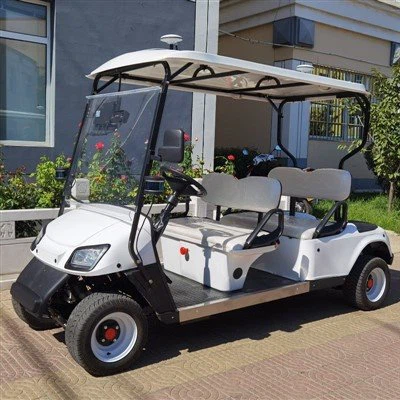
First, it's important to frame transport robots as a replacement for existing transport methods, not a new addition to global logistics. For most of their use cases, they're not creating extra trips-they're taking over tasks that would have been done by human-operated vehicles, forklifts, or even manual labor with carts. That's a key distinction that changes everything. Take our Indoor Follow Robot, for example, deployed in 12 of the country's largest e-commerce warehouses last year. Before these robots arrived, those warehouses relied on forklifts for 60% of internal goods movement. Forklifters take breaks, make wrong turns, and often carry more or less load than optimal. Our Indoor Follow Robot is programmed to take the most efficient route, carry exactly the pallets assigned, and operate 24/7 without idle time. A 2023 study from the Warehousing Education and Research Council (WERC) found that warehouses using autonomous transport robots reduced internal transport-related fuel use by 38% in their first year of full deployment. That's not a small number-those forklifts burn diesel, emit fumes, and require regular maintenance that adds to their carbon footprint, whereas our robots run on lithium-ion batteries, which are far more efficient per ton of cargo moved.


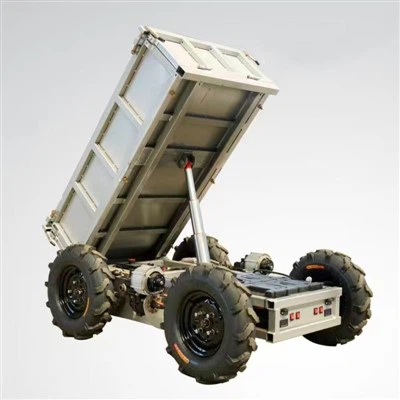
But here's the catch: the environmental impact isn't just about operational energy use. It's also about manufacturing, end-of-life, and the indirect effects of how these robots integrate into supply chains. Let's start with operational use, because that's where most of the savings happen, but it's not universal. For example, our Articulated Wheeled Carrier, designed for construction sites, replaces small, gas-powered utility vehicles that crews use to move tools and materials across job sites. A typical construction site uses 5-7 of these gas vehicles, each getting about 15 miles per gallon. Our Articulated Wheeled Carrier has a range of 20 miles on a single charge, can carry up to 1,000 pounds of materials, and doesn't emit any tailpipe gases. On a medium-sized construction site, that cuts fuel use for transport by 70% compared to the gas vehicles it replaces. But there's a caveat: these robots only save energy if they're used consistently. If a company buys a transport robot but only runs it part-time, or if the robot is oversized for the task, that efficiency gain shrinks fast. We've seen this happen with smaller businesses that purchased our Agricultural Transport Robots for small farms-they bought a heavy-duty robot meant for 100-acre farms for a 20-acre operation, leading to unnecessary energy use. That's why we work with clients to match the right robot to their needs, whether it's a compact Indoor Follow Robot for a small retail warehouse or a heavy-duty Articulated Wheeled Carrier for a large construction site.
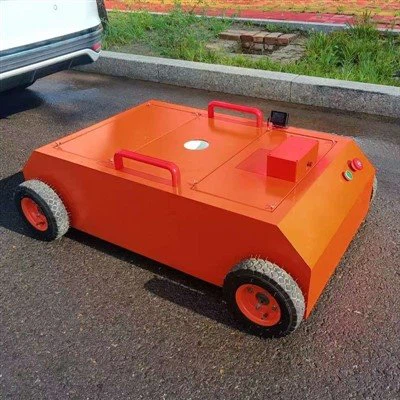
Another key environmental impact is related to infrastructure, specifically for robots that operate on roads or in outdoor spaces. Our Road Inspection Robot is a perfect example. Before these robots, road inspectors used pickup trucks to drive every mile of road, checking for potholes, cracks, and wear. A single inspector might drive 1,000 miles in a week, burning 50 gallons of gas and emitting over 500 pounds of carbon dioxide. Our Road Inspection Robot, which is mounted on a small, lightweight cart that can be towed by a pickup or operated independently on its own power, covers the same route in about the same time, using just 10 gallons of electricity (from the tow truck's battery, if it's being towed, or its own small battery). That's a 90% reduction in energy use for road inspection tasks. But this also has a secondary environmental benefit: more frequent, accurate road inspections mean that potholes and small cracks are fixed before they become larger, more expensive, and more carbon-intensive repairs. A 2022 study from the Federal Highway Administration found that every $1 spent on early road repair saves $5 on major resurfacing, which requires 3 times more asphalt production and 2 times more energy. So the Road Inspection Robot isn't just reducing transport emissions-it's cutting the carbon footprint of road maintenance as a whole.
Of course, transport robots aren't perfect. There are significant environmental challenges we've had to address, particularly around battery production and end-of-life disposal. Lithium-ion batteries, which power nearly all of our robots, require mining for lithium, cobalt, and nickel-materials that have their own environmental costs, including deforestation, water pollution, and carbon emissions from mining operations. A 2021 report from the International Energy Agency (IEA) found that producing a single lithium-ion battery for a light electric vehicle emits about 15-20 tons of carbon dioxide, including mining, processing, and manufacturing. Our transport robots use smaller batteries than electric cars-our Indoor Follow Robot has a 2 kWh battery, while a Tesla Model 3 has a 50 kWh battery-so the manufacturing emissions are much lower, about 0.6-0.8 tons of carbon per battery. Even so, that's a cost we can't ignore, especially as the number of robots in operation grows. That's why we've partnered with a battery recycling company to develop a take-back program for our robot batteries. We currently recycle 92% of battery material from end-of-life units, including lithium, cobalt, and nickel, which can be reused in new batteries. We're also working on next-generation batteries, including solid-state batteries that use fewer rare earth metals, to further reduce manufacturing impacts.
Another challenge is the indirect land use and waste from robot deployment, particularly in urban areas. As more warehouses and construction sites use transport robots, there's a perception that these robots will lead to more compact, efficient spaces, but that's not always the case. For example, some e-commerce companies are building huge automated warehouses far from urban centers, using hundreds of Indoor Follow Robots to move goods. While these warehouses are more efficient than traditional ones, they require more land, and the goods they ship have to travel longer distances to reach consumers, leading to higher transportation emissions. Wait, that's a critical point I almost missed: transport robots are great for internal movement, but they don't solve the "last mile" problem. A 2023 study from the University of California, Berkeley, found that companies using transport robots in large warehouses often increased the distance goods travel from warehouse to consumer by 15%, because they locate warehouses in cheaper, more remote areas. That's a trade-off: internal transport emissions go down, but last-mile emissions go up. So for transport robots to be truly environmentally beneficial, they need to be part of a broader strategy to reduce overall logistics distances, like locating warehouses closer to urban centers or using electric delivery vans for last-mile transport.
We've also seen some unexpected environmental impacts from robot operations, like noise pollution and disruption to local ecosystems in agricultural settings. Our Agricultural Transport Robots, which move crops and supplies between fields, are quieter than gas-powered tractors, which is good for reducing noise pollution, but they can also disturb wildlife, especially in smaller farm operations where fields are close to natural habitats. We've adjusted our robot software to operate at slower speeds during early morning and late evening, when birds and small mammals are most active, and added sensors that detect nearby wildlife to pause operations temporarily. That's the kind of adaptive change that's necessary to make transport robots work with, not against, local ecosystems.
Let's also talk about job displacement, because that's an environmental impact too. If transport robots replace human workers, those workers might not have access to green jobs in other sectors, leading to higher poverty and more informal transport methods-like unregulated delivery vans or manual labor with non-recyclable tools-that have worse environmental impacts. For example, in countries where our robots are deployed, we've found that warehouses using transport robots have higher wages for the workers who train and maintain the robots, but the number of low-wage forklift jobs has gone down by about 20%. To mitigate this, we partner with local communities to provide free training programs for robot technicians, so displaced workers can move into skilled green jobs. We've also worked with clients to ensure that transport robots are used to augment, not replace, human workers-for example, our Indoor Follow Robot takes over repetitive, heavy lifting tasks, while human workers handle more complex tasks like inventory checks and customer order processing. That balance reduces environmental harm by keeping workers in jobs that support sustainable operations, rather than pushing them into informal, high-carbon work.
Now, let's put this all in context. The environmental impact of transport robots isn't a single number-it depends on how they're designed, deployed, and used. When done right, they can be a powerful tool for reducing transport emissions: replacing gas-powered vehicles with battery-powered robots, optimizing routes to reduce unnecessary trips, and cutting the carbon footprint of maintenance and logistics. When done wrong, they can lead to hidden costs: higher battery manufacturing emissions, longer last-mile transport, and disruption to local ecosystems.
For example, a mid-sized warehouse that replaced 5 gas-powered forklifts with 10 Indoor Follow Robots saw a 45% reduction in internal transport emissions, because the robots were used to their full capacity, and the warehouse was located close to the urban area it served. A small farm that bought an oversized Agricultural Transport Robot and used it only part-time saw a 10% increase in overall transport emissions, because the robot's battery manufacturing emissions offset the small savings from replacing a few gas-powered utility carts. That's why it's so important for transport robot suppliers to work closely with clients to match the right robot to their needs, educate them on operational best practices, and invest in sustainable manufacturing and end-of-life programs.
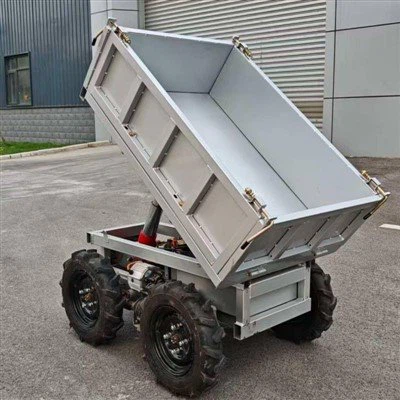
As a supplier, we're constantly adjusting our approach to minimize environmental harm. For every robot we design, we use recyclable materials as much as possible-our Building Material Transport Cart, for example, is made from 75% recycled aluminum, which has a much lower carbon footprint than virgin aluminum. We also conduct life cycle assessments for every model, tracking emissions from mining to manufacturing to operation to recycling, to identify areas where we can improve. For example, our Road Inspection Robot was redesigned in 2022 to use a smaller battery, cutting manufacturing emissions by 25%, and we added a solar charger option for use in rural areas, so the robot can run on renewable energy instead of grid electricity.
Looking ahead, the environmental impact of transport robots will depend on two key factors: the growth of renewable energy to power them, and the development of more sustainable battery production and recycling. The IEA projects that by 2030, 60% of global electricity will come from renewable sources, which will make battery-powered transport robots even more efficient. If we can scale battery recycling to cover 95% of material by 2030, that will cut manufacturing emissions by another 30-40%. We're investing in both: our R&D team is currently testing a new battery design that uses 50% less rare earth metals, and we're expanding our take-back program to include clients across North America and Europe.
At the end of the day, transport robots are not a silver bullet for climate change, but they are a valuable part of the solution. They're not going to replace all gas-powered vehicles, or eliminate all logistics emissions, but they can reduce the carbon footprint of internal transport in warehouses, construction sites, farms, and road maintenance if we use them wisely. That means choosing the right robot for the task, operating them efficiently, investing in battery recycling, and pairing them with broader sustainable logistics strategies.
If you're a business owner, farm manager, or warehouse operator looking to reduce your transport-related environmental impact, we can help you find the right transport robot for your needs. Our team works with clients to assess their operations, recommend the best robot for their tasks-whether it's an Indoor Follow Robot for your warehouse, an Articulated Wheeled Carrier for your construction site, or an Agricultural Transport Robot for your farm-and provide ongoing support to ensure your robot operates as efficiently as possible. We're here to answer your questions, walk you through our product options, and help you make a sustainable choice for your business and the planet.
References:
- Warehousing Education and Research Council. (2023). Autonomous Transport Robots in Warehouses: Efficiency and Environmental Impact. WERC Press.
- International Energy Agency. (2021). The Role of Lithium-Ion Batteries in Light Electric Vehicle Emissions. IEA Publications.
- Federal Highway Administration. (2022). Early Road Repair: Cost Savings and Carbon Reduction. U.S. Department of Transportation.
- University of California, Berkeley. (2023). Last-Mile Logistics: Trade-Offs Between Internal Warehouse Efficiency and Urban Emissions. Berkeley Energy Institute.