Hey there! As a supplier of tank tread robots, I've been getting a ton of questions lately about how these bad boys perform in mountainous environments. So, I thought I'd take a deep dive into this topic and share my insights with you.
First off, let's talk about what makes a tank tread robot a great option for mountainous terrain. Unlike traditional wheeled robots, tank treads offer superior traction and stability. They distribute the robot's weight evenly across a larger surface area, which helps prevent it from sinking into soft or uneven ground. This is especially important in mountainous areas where the terrain can be rocky, muddy, or covered in snow.
Another advantage of tank tread robots is their ability to navigate steep slopes. The treads provide a high level of grip, allowing the robot to climb inclines that would be impossible for a wheeled robot. This makes them ideal for tasks such as surveillance, search and rescue, and environmental monitoring in mountainous regions.
But how do tank tread robots actually perform in a mountainous environment? Well, it depends on a few factors. One of the most important factors is the design of the robot. A well-designed tank tread robot will have a low center of gravity, which helps improve stability on uneven terrain. It will also have a strong and durable chassis that can withstand the rigors of mountainous conditions.
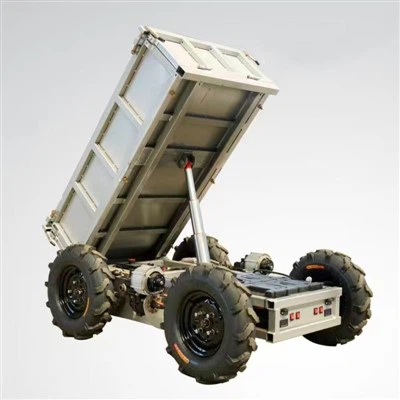
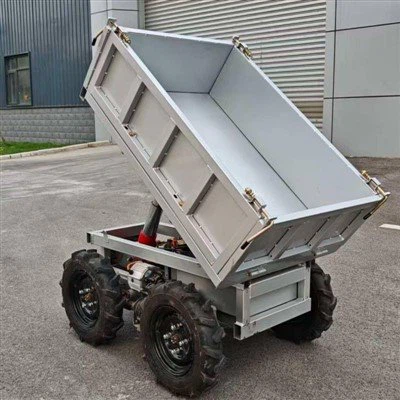
At our company, we offer a range of Outdoor Robot Chassis that are specifically designed for outdoor use, including mountainous environments. These chassis are made from high-quality materials and feature advanced suspension systems that help absorb shocks and vibrations. They also have a modular design, which allows for easy customization and upgrades.
Another factor that affects the performance of a tank tread robot in a mountainous environment is the type of sensors and cameras it is equipped with. In mountainous areas, visibility can be limited due to fog, dust, or heavy vegetation. That's why it's important for the robot to have sensors that can detect obstacles and navigate around them. Cameras can also be useful for providing visual feedback to the operator and for capturing images and videos of the surrounding environment.
Our tank tread robots are equipped with a variety of sensors and cameras, including lidar, radar, and thermal imaging cameras. These sensors provide real-time data about the robot's surroundings, allowing it to navigate safely and efficiently in even the most challenging mountainous conditions.
In addition to sensors and cameras, the performance of a tank tread robot in a mountainous environment also depends on its power source. Mountainous areas can be remote and difficult to access, which means that the robot needs to have a long battery life or be able to run on alternative power sources such as solar or fuel cells.


Our Large Robot Chassis are designed to be energy-efficient and can be equipped with high-capacity batteries or alternative power sources. This allows them to operate for extended periods of time without the need for frequent recharging or refueling.
Of course, no robot is perfect, and tank tread robots do have some limitations in a mountainous environment. One of the main limitations is their speed. Tank treads are designed for stability and traction, not for speed. This means that tank tread robots are generally slower than wheeled robots on flat terrain. However, in mountainous areas, speed is often not as important as stability and maneuverability.
Another limitation of tank tread robots is their turning radius. Tank treads are designed to turn by skidding, which means that they require a larger turning radius than wheeled robots. This can make it difficult for tank tread robots to navigate tight spaces or make sharp turns in mountainous terrain.
Despite these limitations, tank tread robots are still a great option for many applications in mountainous environments. Their superior traction, stability, and maneuverability make them ideal for tasks such as surveillance, search and rescue, and environmental monitoring. And with the latest advancements in technology, tank tread robots are becoming more and more capable of handling even the most challenging mountainous conditions.
If you're interested in learning more about our tank tread robots and how they can perform in a mountainous environment, please don't hesitate to contact us. We'd be happy to answer any questions you may have and help you find the right robot for your needs. Whether you're looking for an Outdoor Robot Chassis, a Large Robot Chassis, or an Eight-wheeled Drive Robot Chassis, we've got you covered.
Let's start a conversation and see how our tank tread robots can help you tackle your next mountainous challenge!
References:
- Robotics: Science and Systems by Vijay Kumar and Marco Hutter
- Mobile Robots: Inspiration to Implementation by Roland Philippsen and Illah Nourbakhsh